
Post-harvest by crop
Post-harvest solutions by crop and business
Crop-by-crop guides to extending the shelf life of Thai fresh exports with FreshTrap, the 1-MCP sachet that CHON Chemical synthesises and verifies in Thailand.
1-MCP (1-methylcyclopropene) holds back the plant's response to ethylene, the natural hormone that tells produce and flowers to ripen and wilt. Choose your crop or your business below. Each guide says where its evidence comes from: our own in-house trials, published research on 1-MCP, or neither yet, in which case we offer a trial on your crop. And each says where 1-MCP does not help.
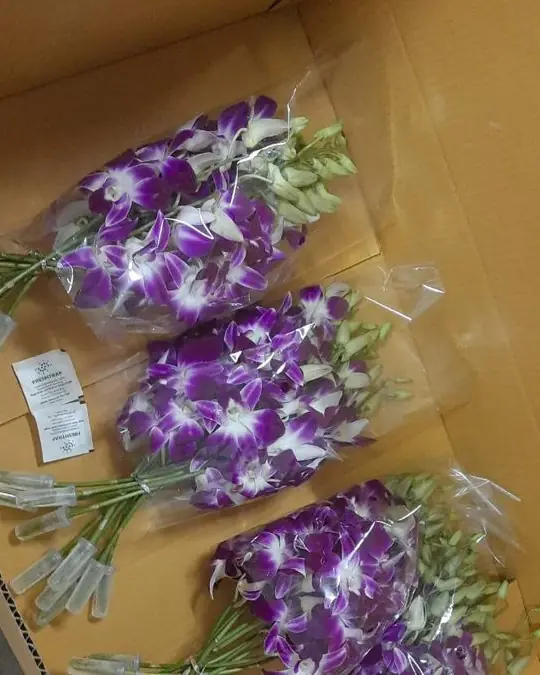
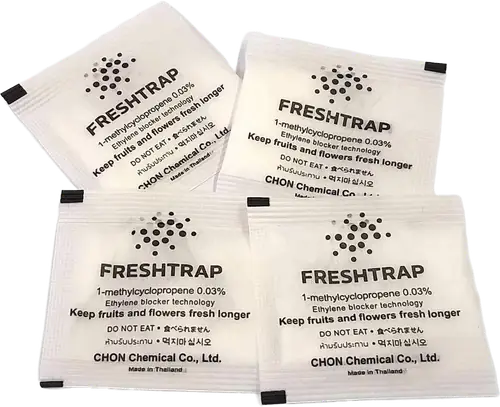
Enclosed spaces onlyCarton · cold room · container
By crop
Choose your crop
Four crop guides, each with its evidence labelled: our in-house trials, published research on 1-MCP, or a trial invitation where we have no result of our own yet.
- Published research · trial invitation
Durian
The guide carries published research on 1-MCP and a trial invitation. We have not yet run FreshTrap trials on durian — that is what the monitored trial is for.
- Established commercial use · published research
Cut flowers & orchids
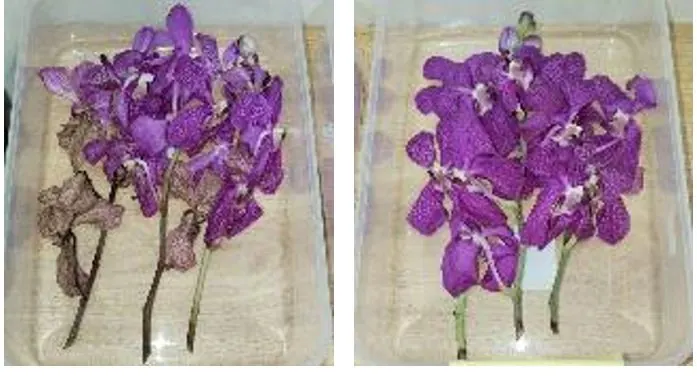
Cut orchids are where 1-MCP is already in established commercial use in Thailand: Dendrobium, Mokara and Vanda. The guide adds published vase-life research. Photo pair: from the FreshTrap datasheet.
- In-house trial · CHON Chemical
Vegetables & herbs
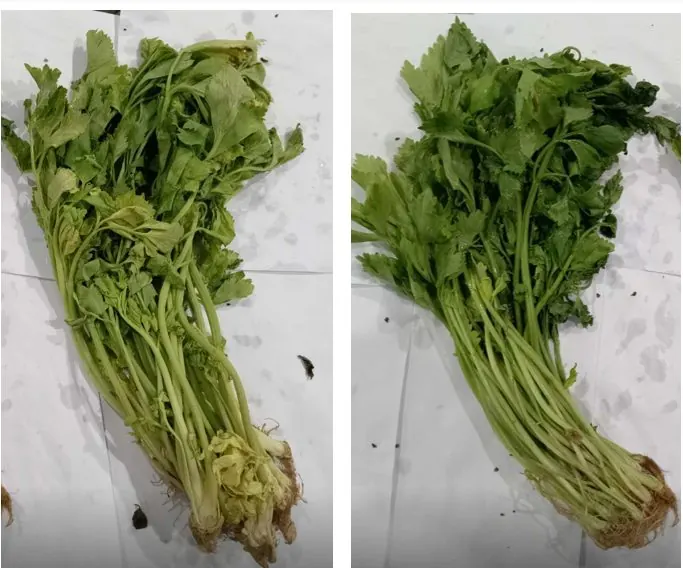
Celery stayed fresh for 10 days in our in-house trial, and we have trialled Chinese kale and choy sum too. Results depend on the crop and on storage conditions.
- In-house trial · published research
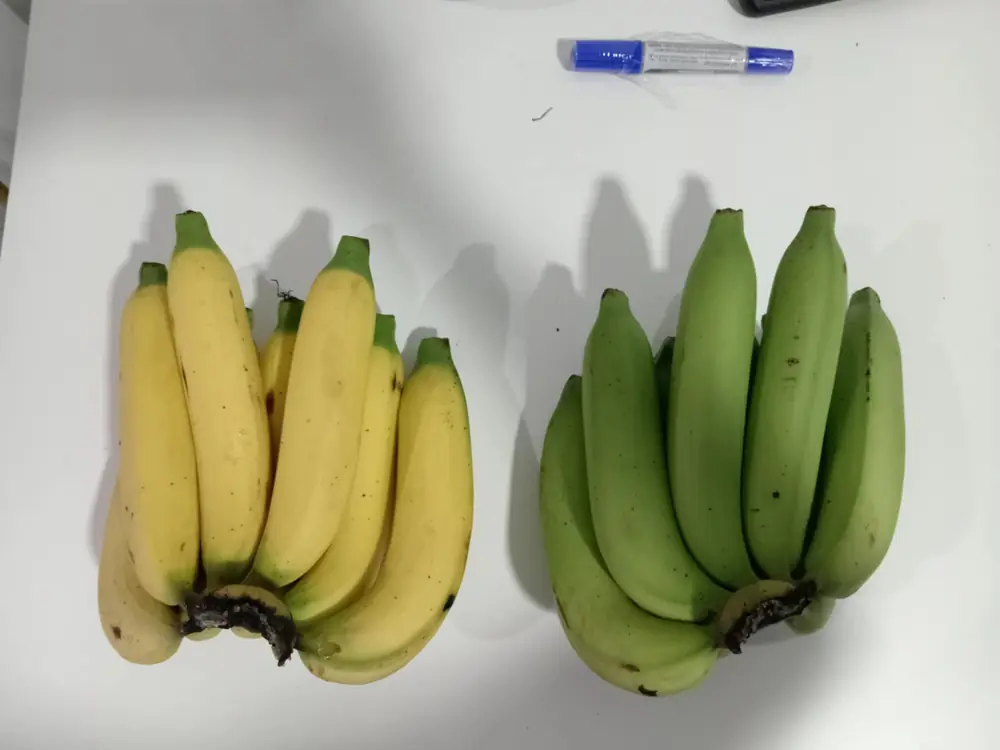
Banana
Our in-house photos show the same crop, stored the same way, on the same day. The guide adds published research on 'Khai' banana and a caution on uneven ripening.
In-house pairs (celery, banana): control and treated lots stored under the same conditions and photographed from day 0.
How to read our crop pages
Four labels, kept apart
A number on a crop page always carries its label in the same sentence, so you can tell whose result it is and how it was measured.
In-house trial · CHON Chemical
Our own test: control and treated lots of the same crop, stored under the same conditions and photographed from day 0.
Published research on 1-MCP
Studies of the molecule by other researchers, cited with authors, year and the conditions they used. They are not FreshTrap results, and their doses are not a FreshTrap recommendation.
Established commercial use
Where 1-MCP is already in established commercial use in Thailand, as it is for cut orchids. It describes the trade, not a FreshTrap result.
Trial invitation
Where we have no result of our own yet, we say so and offer a monitored trial on your crop, with your cartons and your storage.
Published research on 1-MCP — not FreshTrap results
Mango and mangosteen: published research so far
Both are climacteric fruit. We have not yet run FreshTrap trials on mango — that is what the monitored trial is for. Below are studies of the molecule with the conditions the authors used; their doses are the papers', not a FreshTrap recommendation.
Mango
Of the doses tested on 'Nam Dokmai' mango, 1-MCP at 250 ppb for 24 hours kept the fruit firmest, and shelf life reached 15 days at 20 °C (Penchaiya et al. 2006). A meta-analysis of 292 papers found that mango responds less consistently than many other climacteric fruit (Zhang et al. 2020).
Published research on 1-MCP, not FreshTrap results — Penchaiya et al. 2006; Zhang et al. 2020
Mangosteen
Mangosteen treated with 1-MCP at 1,000 nL/L for 4 hours had a shelf life up to 95% longer at ambient temperature (Bayogan et al. 2010).
Published research on 1-MCP, not FreshTrap results — Bayogan et al. 2010
By business
Solutions by business
What a treatment is for depends on what you ship, how you pack it and how far it travels.
Durian · banana · mango · mangosteen
Dendrobium · Mokara · Vanda
Cut-flower and orchid exporters, farms and florists
Treating the sprays in a sealed carton can help toward a longer vase life and less flower drop. Cut orchids are where 1-MCP is already in established commercial use in Thailand. See cut flowers and orchids.
Leafy greens · herbs · parcels
Vegetable and herb shippers, retail and online sellers
For leafy greens, herbs and parcels that spend 2–3 days in transit: seal a sachet in with the produce for 12–24 hours before it leaves. See vegetables and herbs.
Cold rooms · containers
Cold-store and logistics operators
Treat a whole cold room or a container load rather than carton by carton. The format depends on the space you treat; see FreshTrap formats.
Talk to our technical teamDistributors and ASEAN importers
Technical support and documents on request.
Apply to become a distributorBuyers of Thai produce abroad
Read what 1-MCP is, and where the molecule stands in the US, the EU and Codex on our safety and regulation page.
In the packing line
How a treatment fits your packing line
The treatment is the same for every crop. The five steps at the packing table, with handling notes, are on how to use FreshTrap.
Limits
Where 1-MCP helps less, or not at all
1-MCP does not help non-climacteric fruit such as longan, rambutan, young coconut, citrus and strawberry.
Non-climacteric fruit
Longan, rambutan, young coconut, citrus and strawberry do not ripen in response to ethylene, so there is little for 1-MCP to hold back. In published research on non-climacteric fruit, its effects were small and mostly on green tissue (Li et al. 2016).
Published research on 1-MCP, not FreshTrap results — Li et al. 2016
It delays ripening; it does not stop it
Plants gradually form new receptors (Hu et al. 2017), so a treatment's effect wears off with time.
Published research on 1-MCP, not FreshTrap results — Hu et al. 2017
It is not a rot treatment
1-MCP slows ripening and senescence; it does not control decay (Watkins 2006). Keep your sanitation and your cold chain as they are.
Published research on 1-MCP, not FreshTrap results — Watkins 2006
Results vary by crop and cultivar
The response depends on maturity, dose, cultivar, temperature, packaging and timing (Satekge & Magwaza 2022). That is why we set the dose with you and trial it on your own crop.
Published research on 1-MCP, not FreshTrap results — Satekge & Magwaza 2022
Registration with Thailand's Department of Agriculture is in progress. More on safety and regulation.
Questions
Post-harvest by crop: short answers
Why doesn't 1-MCP help longan or rambutan?
Longan and rambutan are non-climacteric: their ripening is not driven by ethylene, so holding back the ethylene signal does little. Published research on 1-MCP — not FreshTrap results: in non-climacteric fruit, the effects of 1-MCP are small and mostly on green tissue (Li et al. 2016).
Has CHON Chemical tested FreshTrap on durian?
Not yet. Published research on 1-MCP — not FreshTrap results: 'Monthong' durian treated with 0.5 ppm 1-MCP for 12 hours at 25 °C and then stored at 15 °C kept for 30 days, against 18 days untreated (Amornputti et al. 2014). We have not yet run FreshTrap trials on durian — that is what the monitored trial is for. More on the durian page.
Which crops has CHON Chemical trialled FreshTrap on?
Our own paired trials cover banana and green papaya among the fruit, and celery, Chinese kale, holy basil and choy sum among the vegetables, plus cut orchids, where 1-MCP is already in commercial use. In our in-house trials, produce stayed saleable for 7–20 extra days depending on the crop and on storage conditions. The vegetable and banana pages show their own pairs, and the FreshTrap page shows the pairs side by side.
Next step
Not sure about your crop? Trial it side by side
Same crop, same storage, same day. We set the dose with you, run the treatment together and photograph both lots from day 0.
References
Published research on 1-MCP — not FreshTrap results.
Amornputti S., Ketsa S., van Doorn W.G. (2014). Postharvest Biology and Technology 97:111–114. doi:10.1016/j.postharvbio.2014.06.011 — durian 'Monthong': 0.5 ppm, 12 h, 25 °C; storage at 15 °C 18 → 30 days.
Penchaiya P., Jansasithorn R., Kanlayanarat S. (2006). Acta Horticulturae 712:717–722. doi:10.17660/ActaHortic.2006.712.91 — mango 'Nam Dokmai': 250 ppb for 24 h best for firmness; shelf life 15 days at 20 °C (the untreated value is not given in the abstract).
Bayogan E.R.V. et al. (2010). Acta Horticulturae 875:97–104. doi:10.17660/ActaHortic.2010.875.10 — mangosteen: 1,000 nL/L for 4 h; shelf life up to 95% longer at ambient temperature.
Zhang, Ma, Dong, Terry, Watkins, Yu (2020). Horticulture Research 7:208. doi:10.1038/s41438-020-00405-x — meta-analysis of 292 papers on climacteric fruit; mango responds less consistently.
Li L., Lichter A., Chalupowicz D. et al. (2016). Postharvest Biology and Technology 111:322–329. doi:10.1016/j.postharvbio.2015.09.031 — non-climacteric fruit: effects small, mostly on green tissue.
Hu et al. (2017). BioResources 12(1):2234–2248 — plants form new receptors over time; the effect is a delay (review). bioresources.cnr.ncsu.edu
Watkins (2006). Biotechnology Advances 24:389–409. doi:10.1016/j.biotechadv.2006.01.005 — review: 1-MCP slows senescence but does not control decay.
Satekge & Magwaza (2022). International Journal of Fruit Science 22:595–607. doi:10.1080/15538362.2022.2085231 — efficacy depends on maturity, dose, cultivar, temperature, packaging and timing.
