Post-harvest solutions · Banana

Delaying banana ripening with 1-MCP

FreshTrap, CHON Chemical's 1-MCP sachet synthesised in Thailand, delays banana ripening: sealed in with the fruit for 12–24 hours, its 1-methyl­cyclopropene occupies the ethylene receptors, so the ripening signal is held back.

Bananas keep ripening after harvest, and one hand that gets ahead can hurry the whole carton. The treatment delays ripening; it does not stop it. Product details are on the FreshTrap page.

Request a trial on your crop How to use FreshTrap

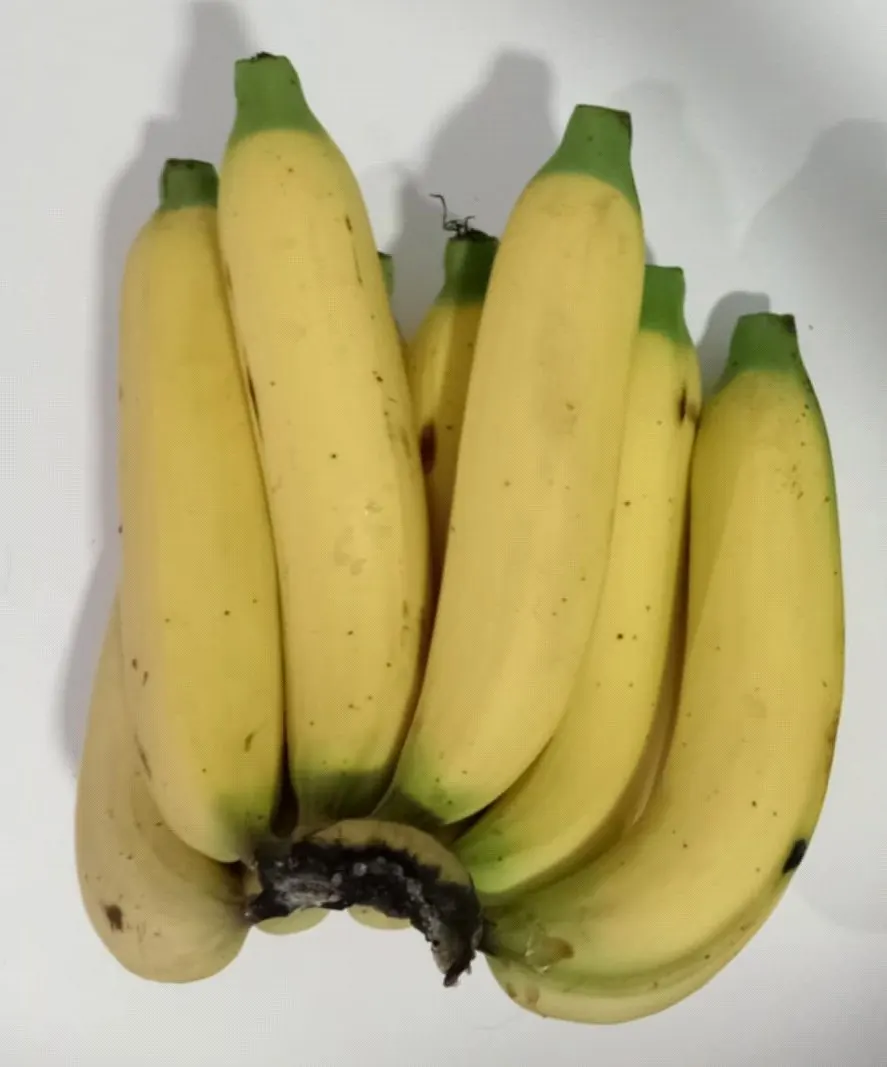
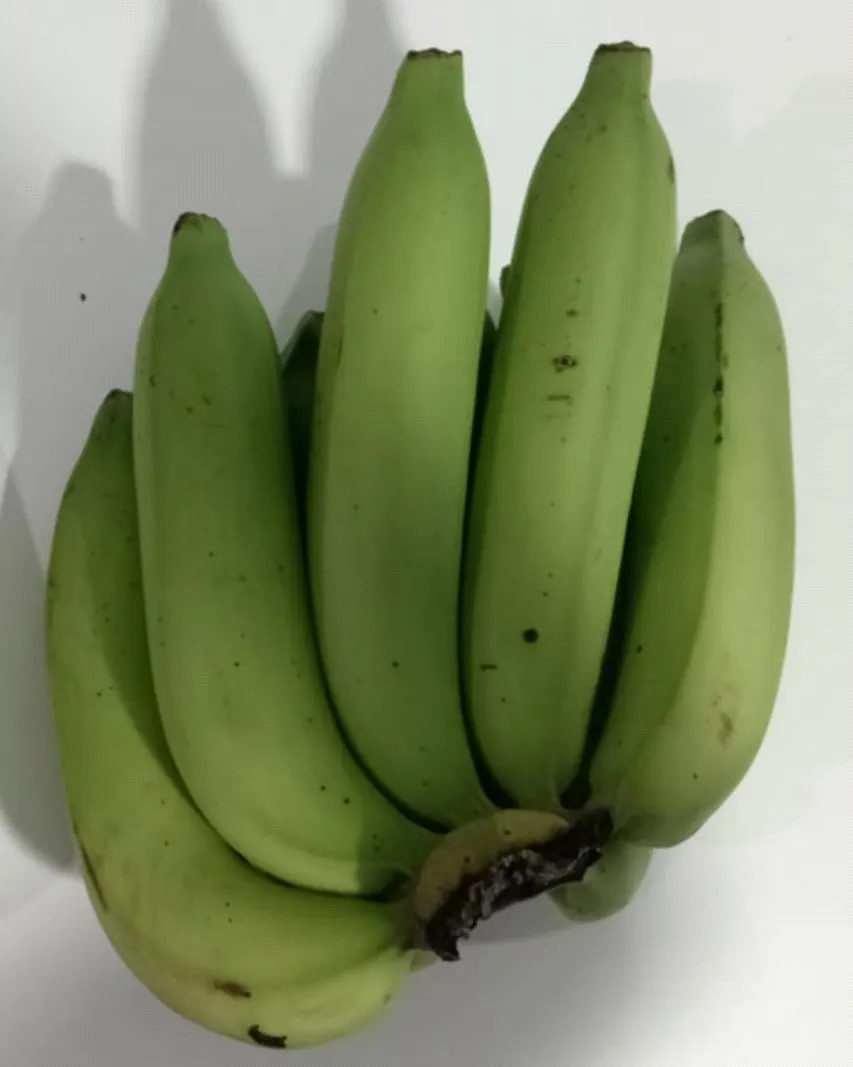
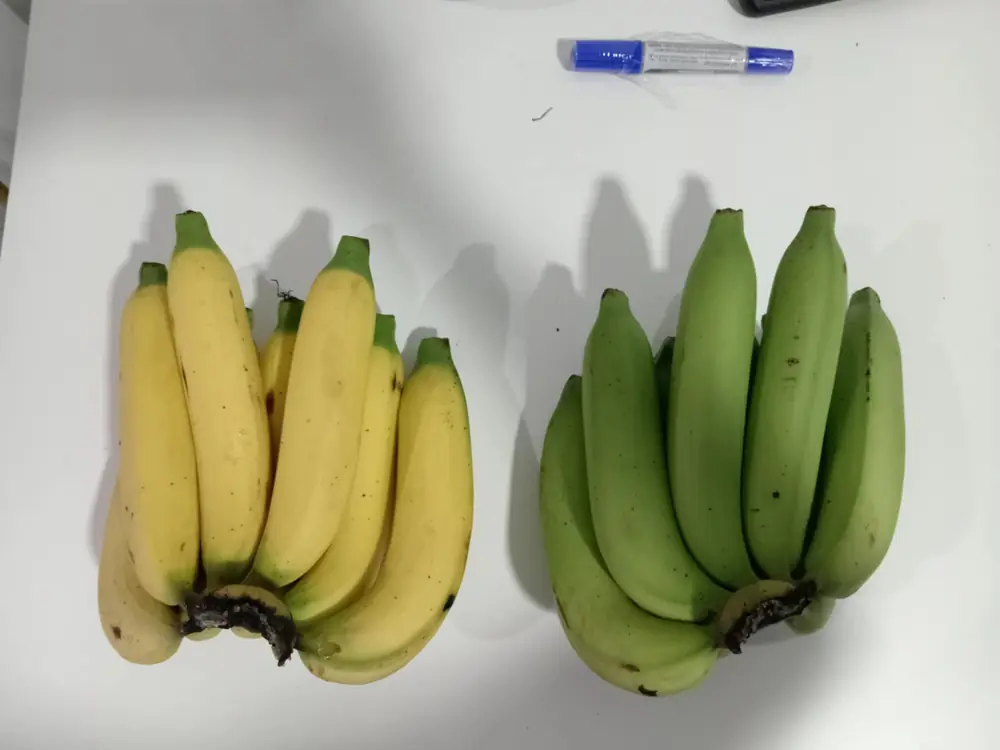
Bananas after the same hold: untreated control ripe and yellow (left), FreshTrap-treated still green (right), in-house trial.
Control and treated lots stored under the same conditions and photographed from day 0.

12–24 hourssealed in a carton, cold room or container

Delays, not stopstreated bananas still ripen

The problem

Why one ripe hand hurries the whole carton

Bananas are climacteric fruit: they keep ripening after harvest. Ethylene is the natural hormone that tells produce and flowers to ripen and wilt, and a ripening banana gives off ethylene of its own, which can hurry the fruit packed around it. For an exporter that means yellow fingers on arrival and less say over when the fruit is ready for the market.

1-MCP works at the receptor, not on the ethylene in the air. Moistened, the FreshTrap sachet releases a tiny dose of 1-MCP gas that occupies the plant's ethylene receptors, so the ripening signal is held back, whether the ethylene comes from the air in the carton or from the fruit itself. 1-MCP binds the ethylene receptor about 10 times more strongly than ethylene itself (Blankenship & Dole 2003).

That is also how it differs from the other products used on bananas: 1-MCP blocks the response to ethylene; absorbers (KMnO₄ sachets) remove ethylene from the air; ripening agents (ethephon) add it. How 1-MCP works explains the mechanism in full.

In-house trial · CHON Chemical

Our own banana trial, side by side

Untreated banana bunch (control), fully yellow on the same day as the treated bunch: in-house trial.
FreshTrap-treated banana bunch, still green on the same day as the control: in-house trial.

In-house trial · CHON Chemical

Same crop, same storage, same day: side by side.

Results depend on the crop and on storage conditions.

This is our trial, on our own fruit. It is not yet your cultivar, your cartons or your route: that is what the monitored trial is for.

Request a trial on your crop

Published research on 1-MCP — not FreshTrap results

What published research reports for 1-MCP on bananas

Independent studies of the active ingredient, quoted with the treatment conditions the authors used. The doses are the researchers' own, not a FreshTrap recommendation.

On the packing line

How FreshTrap fits a banana packing line

On bananas the maturity of the fruit at treatment matters too (see the research above), so the first step with a new customer is a monitored trial on your own fruit: control cartons and treated cartons packed the same day, stored the same way and photographed from day 0.

What goes in the carton: the FreshTrap 1-MCP 0.03% sachet (0.5 g), 1-MCP held in α-cyclodextrin and synthesised in Thailand.

See how to use FreshTrap for the full method and handling notes, or see FreshTrap for the product itself.

Request a trial on your crop

For banana packers and exporters

What a few more green days can help with

A longer transit life

Fruit that is still green when it arrives has more of its life left for the market. How many days you gain depends on the fruit, the storage and the route.

Pick, pack and ship on separate days

Holding ripening back can help you spread a harvest peak: cut one day, pack the next, and load when the truck or the vessel is ready.

Sea instead of air, where the days allow

On some routes a longer transit life is what makes sea freight worth considering where only air was possible before. Whether it holds for your route is a question a monitored trial can answer.

Limits

What 1-MCP will not do for bananas

Read these before you treat your first carton.

It delays; it does not stop

1-MCP delays ripening rather than stopping it: plants gradually form new receptors, so the effect of treatment wears off with time, and treated bananas still ripen (Hu et al. 2017).

Published research on 1-MCP, not FreshTrap results — Hu et al. 2017, BioResources 12(1):2234–2248

Uneven ripening is possible

Published research records that 1-MCP fumigation of bananas can cause uneven ripening, and that the response depends on how mature the fruit is (Wasala et al. 2021). That is why we publish no dose table, and why your first shipment is a monitored trial, not a guess.

Published research on 1-MCP, not FreshTrap results — Wasala et al. 2021, Asian Res. J. Agric. 14(1):44–56

Not a fungicide, not a cold chain

Temperature control, hygiene and careful handling matter as much as before.

Published research on 1-MCP, not FreshTrap results — Watkins 2006, Biotechnol. Adv. 24:389–409

Enclosed spaces only

It works only in an enclosed space: a sealed carton, cold room or container. If your cartons have vent holes or the fruit travels on open pallets, talk to us before you treat and we will set the method with you.

Among fruit, climacteric fruit only

Bananas respond because their ripening is driven by ethylene. See post-harvest solutions by crop.

Registration with Thailand's Department of Agriculture is in progress. The active ingredient, 1-MCP, is registered by the US EPA in other companies' products; FreshTrap is not EPA-registered. For residue questions on your destination market, ask us — and check that market's own rules. More on safety and regulation.

Post-harvest solutions

Other crops and uses

Next step

Run it on your bananas before you decide

A monitored trial on your own fruit: control cartons and FreshTrap cartons packed the same day, stored the same way and photographed from day 0. We set the dose with you for your cartons, your fruit and your journey time, and we run the first treatment with you.

Request a trial on your crop Request a quote Talk to our technical team

+66 2 448 6244+66 95 264 5626contact@chonchemical.com

References

Published research on 1-MCP — not FreshTrap results. Regulatory lines describe the active ingredient 1-MCP, not FreshTrap. Last updated .

Jansasithorn R., Kanlayanarat S. (2006). Acta Horticulturae 712:723–728. doi:10.17660/ActaHortic.2006.712.92 — 'Khai' bananas: 50–250 ppb for 24 h, stored at 20 °C; firmness retained, shelf life reached 20 days at 20 °C; untreated value not given in the abstract.

Wasala W.M.C.B. et al. (2021). Asian Research Journal of Agriculture 14(1):44–56. doi:10.9734/ARJA/2021/v14i130118 — banana review: response depends on maturity; uneven ripening possible, so the dose must be controlled.

Watkins (2008). HortScience 43:86–94. doi:10.21273/HORTSCI.43.1.86 — the dose must delay ripening, not block it.

Satekge & Magwaza (2022). International Journal of Fruit Science 22:595–607. doi:10.1080/15538362.2022.2085231 — efficacy depends on maturity, dose, cultivar, temperature, packaging and timing.

Hu et al. (2017). BioResources 12(1):2234–2248 — plants form new receptors over time; the effect is a delay (review). bioresources.cnr.ncsu.edu

Watkins (2006). Biotechnology Advances 24:389–409. doi:10.1016/j.biotechadv.2006.01.005 — review: 1-MCP slows senescence but does not control decay.

Blankenship & Dole (2003). Postharvest Biology and Technology 28:1–25. doi:10.1016/S0925-5214(02)00246-6 — 1-MCP binds the receptor about 10× more strongly than ethylene; review.

US EPA. 1-Methyl­cyclopropene pesticide fact sheet (PC code 224459), 2009 revision — first registered April 1999; enclosed spaces; low toxicity. www3.epa.gov