
Available now
0.03% sachet: cartons and parcels
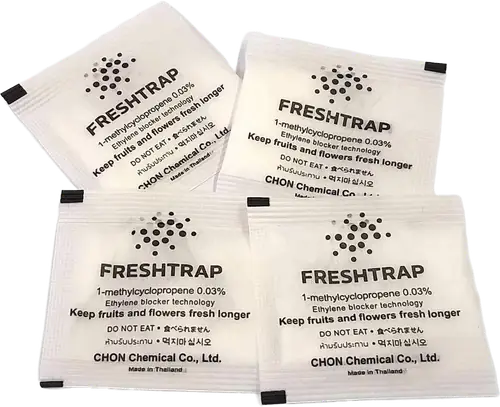
The standard format: 0.5 g sachets for export cartons, produce boxes and parcels. Supplied in 400 g pouches of 800 sachets.
Request a quoteFreshTrap · 1-MCP for post-harvest use
Extends the shelf life of fruits, vegetables, and flowers. Protects against ethylene damage.
FreshTrap is a 1-MCP sachet for the packing line, synthesised and verified in Thailand by CHON Chemical. Sealed in a carton, cold room or container, it delays ripening and wilting of fruit, vegetables and cut flowers.
Registration with Thailand's Department of Agriculture is in progress.
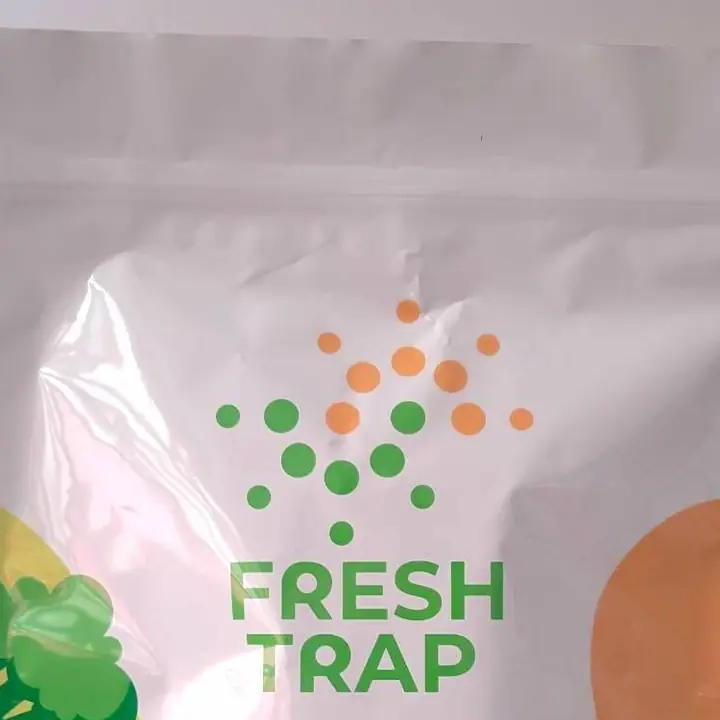
0.03% · 0.5 g sachet400 g pouch = 800 sachets
Made in ThailandSynthesised and verified by CHON Chemical
The product
One sachet, one mist of water, one sealed space. Here is what is inside and how it is made.
1-methylcyclopropene (1-MCP), CAS 3100-04-7, held in an α-cyclodextrin carrier. Moisture releases the gas, which is why the sachet stays sealed and dry until you use it.
FreshTrap 1-MCP 0.03% sachet, 0.5 g. Supplied in a 400 g stand-up pouch of 800 sachets. Barcode (EAN-13): 8857200739528.
The only equipment you need is a hand mist sprayer. No gas cylinders, no generator, no fitting work on the room.
Commercial use in enclosed spaces by packhouses, fruit and flower exporters, retail, florists and flower farms.
The science in three steps
Moistened, the FreshTrap sachet releases a tiny dose of 1-MCP gas that occupies the plant's ethylene receptors, so the ripening signal is held back.
Fruit ripens, leaves yellow and flowers wilt because ethylene binds a receptor in the plant tissue.
A mist of water frees the gas from its carrier; in a sealed space it reaches every fruit and stem.
1-MCP binds the receptor about 10 times more strongly than ethylene (Blankenship & Dole 2003).
The full explainer is on what 1-MCP is.
Directions in brief
Five steps at the packing table. The dose depends on the sealed volume, the crop and the journey time — we set it with you.
Put it in with the produce: in the export carton, or in the cold room or container you are treating.
A short mist from a hand sprayer starts the release.
Close the carton, room or container so the gas stays with the produce.
Nothing else to do while it works.
Open, ventilate and carry on with your normal cold chain.
Formats
One active ingredient, three ways to put it into the space. The 0.03% sachet is what we supply today; the tablet and the powder are on request.
Available now
The standard format: 0.5 g sachets for export cartons, produce boxes and parcels. Supplied in 400 g pouches of 800 sachets.
Request a quoteOn request
For treating a cold room as a whole rather than carton by carton. Ask our technical team about your room.
Talk to our technical teamOn request
For a full container load treated before departure. Ask our technical team about your route.
Talk to our technical teamWho it is for
Made for commercial use in enclosed spaces: the carton, the cold room, the container.
Durian · mango · banana · papaya
Durian, mango, banana and papaya are climacteric fruit: they keep ripening after harvest. A treatment before the journey can help toward a longer transit life and picking, packing and shipping on separate days.
Dendrobium · Mokara · Vanda
Cut orchids are where 1-MCP is already in established commercial use in Thailand: Dendrobium, Mokara and Vanda.
Chinese kale · choy sum · celery · holy basil
Leafy greens and herbs in cartons or parcels, sealed in with a sachet before they leave.
Technical support and documents on request. Apply to become a distributor.
In-house trial · CHON Chemical
In our in-house trials, produce stayed saleable for 7–20 extra days depending on the crop and on storage conditions.
In our own paired trials: banana, green papaya, celery, holy basil and leafy greens, plus cut orchids, where 1-MCP is already in commercial use. Same crop, same storage, same day, side by side. Each crop page shows its own pair: solutions by crop.
In-house trial · CHON Chemical
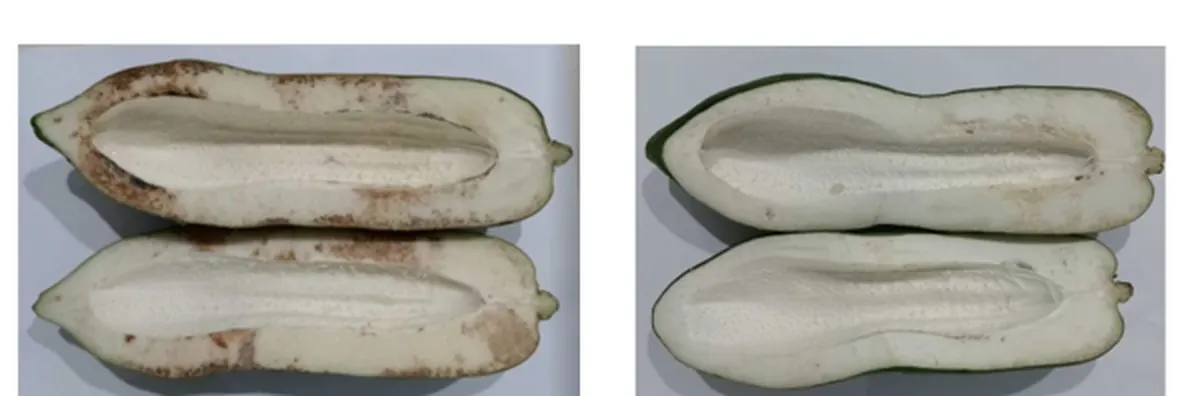
In our in-house trial, the treated fruit showed no internal browning after 20 days at room temperature.
In-house trial · CHON Chemical
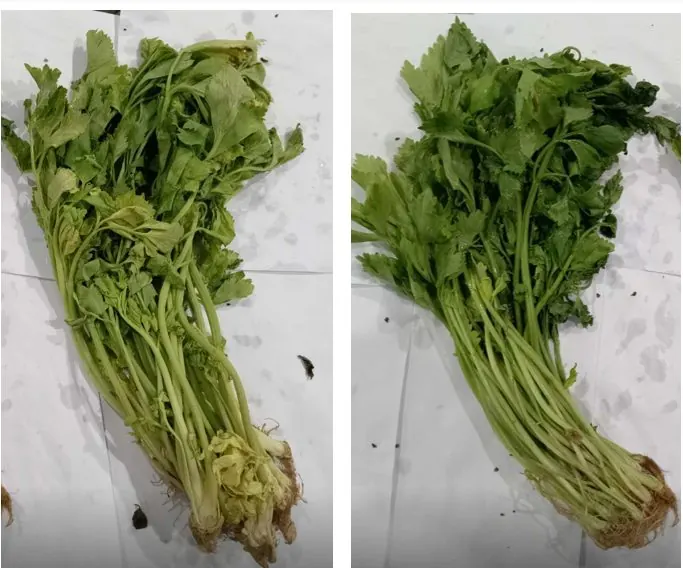
Treated celery stayed green through the 10-day hold in our in-house trial.
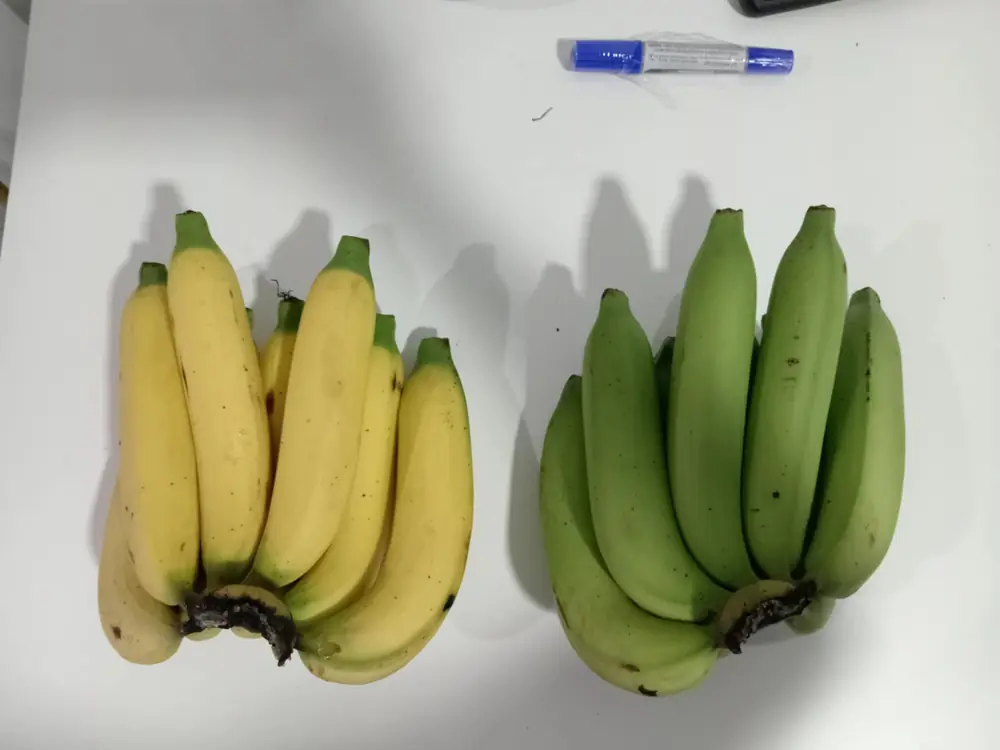
In-house trial · CHON Chemical
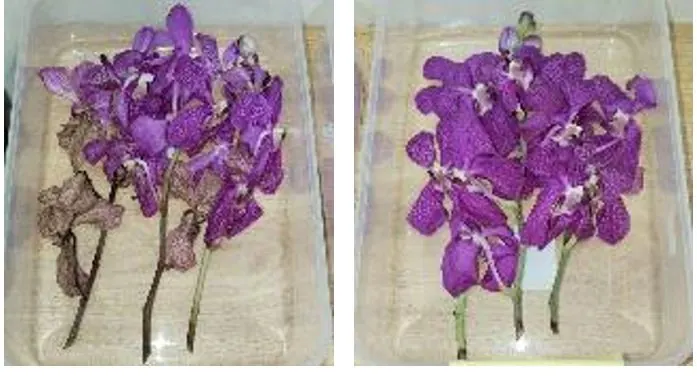
From the FreshTrap product datasheet
Photo pair from our product datasheet.
Control and treated lots stored under the same conditions and photographed from day 0. Results depend on the crop and on storage conditions.
1-MCP delays ripening rather than stopping it; plants gradually form new receptors, so the effect of treatment wears off with time.
1-MCP does not help non-climacteric fruit such as longan, rambutan, young coconut, citrus and strawberry, whose ripening is not driven by ethylene.
Evidence, not advertising
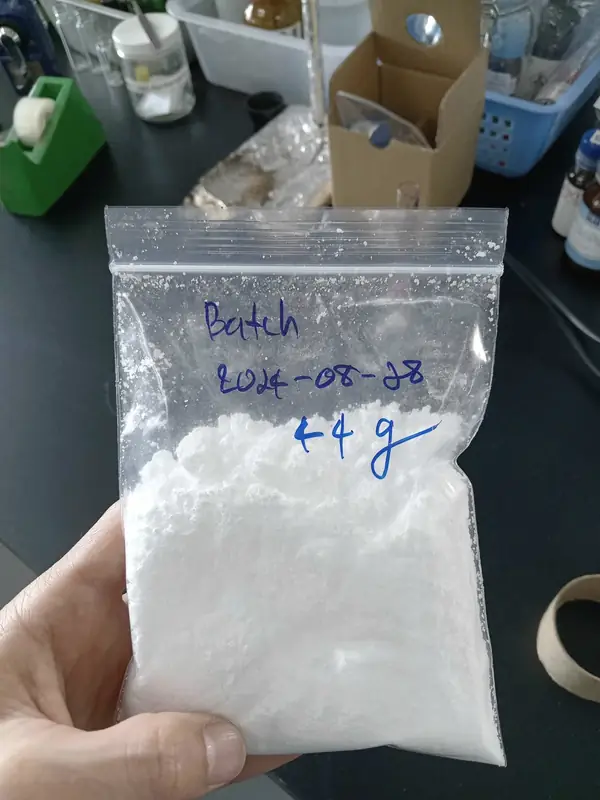
1-MCP is one molecule whoever makes it; what differs is how carefully it is made and checked. FreshTrap's 1-MCP is synthesised in a closed system and captured in α-cyclodextrin powder; moisture releases it.
Every batch: structure confirmed by NMR, content measured by GC-MS. A certificate of analysis (CoA) is available on request.
Regulation and safety
Low toxicity, residue rules and the registration status are explained on safety and regulation, with short answers in the FAQ.
Pricing, supply and documents
We quote by format and volume rather than publish a list price, because the number of sachets depends on your carton, your crop and your route.
What FreshTrap is, how to use it, who it is for. Available on request.
Request the datasheetFor the FreshTrap 1-MCP 0.03% sachet. Available on request.
Request the SDSNMR and GC-MS results for your batch. Available on request.
Request a CoAQuestions
Durian is a climacteric fruit. Published research on 1-MCP — not FreshTrap results: 'Monthong' durian treated with 0.5 ppm 1-MCP for 12 hours at 25 °C and then stored at 15 °C kept for 30 days, against 18 days untreated (Amornputti et al. 2014). We have not yet run FreshTrap trials on durian; that is what the monitored trial is for.
The gas dissipates after treatment; the US EPA exempts 1-MCP residues on fruit and vegetables from a tolerance (40 CFR 180.1220). There is no Codex MRL for 1-MCP. For residue questions on your destination market, ask us, and check that market's own rules too.
Next step
We set the dose with you, run the first treatment together and photograph both lots from day 0.
Regulatory lines describe the active ingredient 1-MCP, not FreshTrap. Published research on 1-MCP — not FreshTrap results.
Blankenship & Dole (2003). Postharvest Biology and Technology 28:1–25. doi:10.1016/S0925-5214(02)00246-6 — 1-MCP binds the receptor about 10× more strongly than ethylene; review.
Hu et al. (2017). BioResources 12(1):2234–2248 — plants form new receptors over time; the effect is a delay (review). bioresources.cnr.ncsu.edu
Amornputti S., Ketsa S., van Doorn W.G. (2014). Postharvest Biology and Technology 97:111–114. doi:10.1016/j.postharvbio.2014.06.011 — durian 'Monthong': 0.5 ppm, 12 h, 25 °C; storage at 15 °C 18 → 30 days.
US EPA. 1-Methylcyclopropene pesticide fact sheet (PC code 224459), 2009 revision — first registered April 1999; enclosed spaces; low toxicity. www3.epa.gov
40 CFR §180.1220 — 1-methylcyclopropene; exemption from the requirement of a tolerance (US residue exemption, 2002). law.cornell.edu
Commission Implementing Regulation (EU) 2019/1085 — EU approval of 1-MCP as an active substance to 31 July 2034. eur-lex.europa.eu
FAO/WHO Codex Alimentarius pesticide index (checked 26 September 2026) — no Codex MRL for 1-MCP. fao.org
