
Try FreshTrap on your crop
A monitored trial with your cartons and your storage, side by side with an untreated lot.
Request a trial on your cropHelp · FAQ
Short answers about CHON Chemical, a Thai chemical-synthesis service company in Bangkok, and about FreshTrap, our 1-MCP sachet that delays ripening of fruit, vegetables and cut flowers.
The questions are in four groups: the company, FreshTrap and 1-MCP, safety and regulation, and ordering and trials. Each answer stands on its own and links to the page with the full story. Results from our own trials are labelled as in-house; research by others is cited and listed under references.
01 · The company
Who we are, where we work, and what we make besides FreshTrap.
CHON Chemical Co., Ltd. is a Thai chemical-synthesis service company that never stops developing new molecules. Established in Bangkok in 2024, we offer custom synthesis, process development and scale-up to kilogram scale, and analytical verification by NMR and GC-MS. Our own first product is FreshTrap, a 1-MCP sachet that delays ripening and wilting of fruit, vegetables and cut flowers. Our services
CHON Chemical was founded from a collaboration with researchers and faculty of the Department of Chemistry, Faculty of Science, Chulalongkorn University. The company is CHON Chemical Co., Ltd., a Thai private limited company (company registration no. 0105567046897). A Thai petty-patent application for the production process behind FreshTrap was filed on 22 January 2025 (no. 2503000266; applicant: Chulalongkorn University). Our story is on the about us page.
In Bangkok, Thailand. Our head office is at 207 Ratchamontri Road, Bang Duan, Phasi Charoen, Bangkok 10160, and our factory is at 188 Prannok-Phutthamonthon Sai 4 Road, Bang Phrom, Taling Chan, Bangkok 10170. Call +66 2 448 6244 or +66 95 264 5626, or e-mail contact@chonchemical.com; every enquiry route is on our contact page.
FreshTrap is the product available now, and its tablet and powder formats are supplied on request. Further molecules are in development: they are research programmes in our lab, not products for sale, and we do not describe what they do until our testing is complete. See our products.
Yes, we take synthesis enquiries. Tell us what you need; we will say honestly whether we can make it, and each molecule we make is verified: by NMR and, where it suits the molecule, by GC-MS. See custom synthesis.
02 · Product and science
What the molecule does, how the sachet is used, and what to expect on your crop.
1-MCP (1-methylcyclopropene) is a synthetic gas that delays ripening and wilting. Ethylene is the natural hormone that tells produce and flowers to ripen and wilt; 1-MCP occupies the plant's ethylene receptors, so the ripening signal is held back. It binds the ethylene receptor about 10 times more strongly than ethylene itself (Blankenship & Dole 2003). More on what 1-MCP is and how it works.
FreshTrap is our 1-MCP sachet: high-purity 1-MCP, synthesised and verified in Thailand, held in α-cyclodextrin powder at 0.03%, 0.5 g per sachet. Every production batch has its structure confirmed by NMR and its content measured by GC-MS. Moistened, the sachet releases a tiny dose of 1-MCP gas, so it works only in an enclosed space — a sealed carton, cold room or container. Place the sachet, mist it with water to start the release, seal, leave it for 12–24 hours, then store and ship as usual. The only equipment you need is a hand mist sprayer. See FreshTrap and how to use FreshTrap.
Climacteric fruit, the kind that keeps ripening after harvest, such as durian, mangosteen, mango, banana and papaya, and ethylene-sensitive cut flowers such as Dendrobium, Mokara and Vanda orchids. For leafy greens and herbs, Chinese kale, choy sum, holy basil and celery stayed fresh longer in our in-house trials; results depend on the crop and on storage conditions. How well 1-MCP works also depends on maturity, dose, cultivar, temperature and packaging (Satekge & Magwaza 2022). It does not help non-climacteric fruit such as longan, rambutan, young coconut, citrus and strawberry, whose ripening is not driven by ethylene. See solutions by crop.
It depends on the crop and the storage. 1-MCP delays ripening rather than stopping it: plants gradually form new receptors, so the effect of treatment wears off with time (Hu et al. 2017). In our in-house trials, produce stayed saleable for 7–20 extra days depending on the crop and on storage conditions; green papaya kept at room temperature, for example, showed no internal browning for 20 days, and celery stayed fresh for 10 days. Control and treated lots were stored under the same conditions and photographed from day 0. We have not yet run FreshTrap trials on durian or mango — that is what a monitored trial on your own crop is for. The trial photos are under what to expect.
1-MCP blocks the response to ethylene; absorbers (KMnO₄ sachets) remove ethylene from the air; ripening agents (ethephon) add it. Because 1-MCP acts at the receptor, it also holds back the response to the ethylene that produce makes itself, while an absorber can only lower the ethylene in the air around it. Neither 1-MCP nor an absorber replaces temperature control, and 1-MCP does not control decay on its own (Watkins 2006). More on how 1-MCP works.
03 · Safety
Statements about other countries describe the active ingredient, 1-MCP, not FreshTrap.
Registration with Thailand's Department of Agriculture is in progress. Outside Thailand, what has been assessed is the molecule, not FreshTrap: the active ingredient, 1-MCP, has been registered by the US EPA since April 1999, for use in enclosed spaces only, in other companies' products; FreshTrap is not EPA-registered. In the European Union, the approval of 1-MCP as an active substance runs to 31 July 2034 (Regulation (EU) 2019/1085). See safety and regulation.
1-MCP acts on a plant receptor; its toxicity to people and animals is low (oral LD50 in rats above 5,000 mg/kg — a literature value for 1-MCP). Wear gloves and eye protection when handling the concentrated powder. The gas dissipates after treatment; the US EPA exempts 1-MCP residues on fruit and vegetables from a tolerance (40 CFR 180.1220). Store the sachets in a cool, dry place in the original packaging, out of reach of children and not near food or feed. Handling, residues and the status of 1-MCP abroad are covered on safety and regulation.
Safety positioning is based on the published international record for 1-MCP and on CHON Chemical's own batch analysis; it is not a regulatory claim pending completion of Department of Agriculture registration.
The gas dissipates after treatment; the US EPA exempts 1-MCP residues on fruit and vegetables from a tolerance (40 CFR 180.1220). There is no Codex MRL for 1-MCP. For residue questions on your destination market, ask us — and check that market's own rules.
1-MCP is not permitted in USDA-certified organic handling. If you work with another organic certifier, check with it separately.
04 · Ordering
How to get a quote, how the dose is set, and how a trial on your own crop works.
Send us an enquiry. We quote by format and volume rather than publish a list price, because the number of sachets depends on your carton, your crop and your route. The 0.03% sachet comes in 400 g stand-up pouches of 800 sachets; a tablet format for a whole cold room and a powder format for a whole container are supplied on request. Tell us what you ship and where it goes, and we will come back with a quote: request a quote.
The dose depends on the sealed volume, the crop and the journey time — we set it with you, usually with a monitored trial on your own crop. That is why we do not publish a dose table: one figure cannot fit every carton, crop and route.
Tell us your crop, your carton or room, and your route. We set the dose with you, run the treatment together, and photograph the control and treated lots from day 0, stored under the same conditions: same crop, same storage, same day, side by side. Request a trial on your crop.
Yes. The product datasheet and the safety data sheet (SDS) for the FreshTrap 1-MCP 0.03% sachet are available on request. A certificate of analysis (CoA) is available on request too. Request the datasheet and SDS.
Go deeper
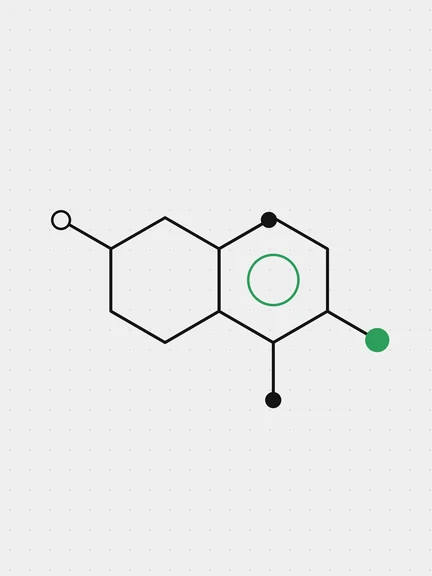
How the molecule holds back the ripening signal, and where it does not help.
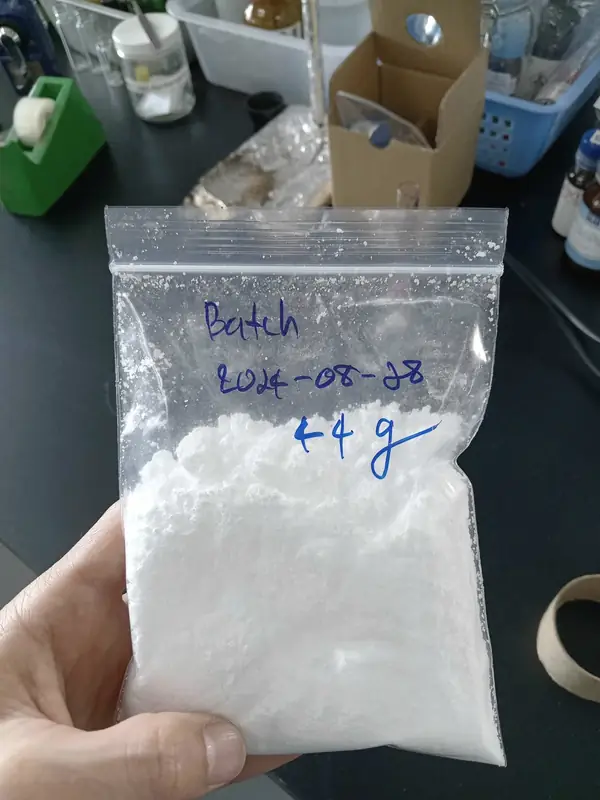
Toxicity, residues, the status of 1-MCP abroad and FreshTrap's registration in Thailand.
Five steps, one hand mist sprayer, 12–24 hours in a sealed space.
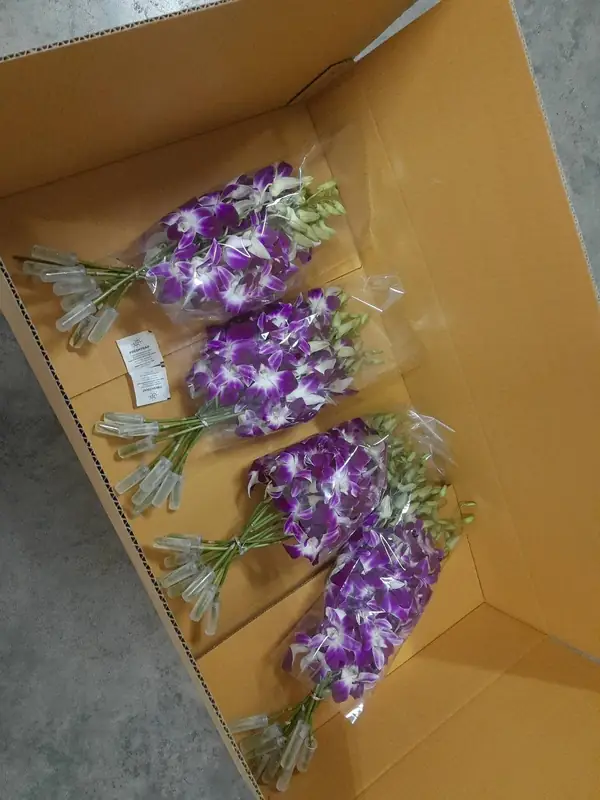
Durian, cut flowers and orchids, vegetables and herbs, and banana.
Contact
Ask us directly. If it is about FreshTrap, tell us your crop, your cartons and your route.
A monitored trial with your cartons and your storage, side by side with an untreated lot.
Request a trial on your cropTell us what you ship and where it goes, and we will quote by format and volume.
Request a quoteThe datasheet and SDS, cold rooms, containers, or anything this page did not answer.
Talk to our technical teamRegulatory lines describe the active ingredient 1-MCP, not FreshTrap. Published research on 1-MCP — not FreshTrap results.
Blankenship & Dole (2003). Postharvest Biology and Technology 28:1–25. doi:10.1016/S0925-5214(02)00246-6 — 1-MCP binds the receptor about 10× more strongly than ethylene; review.
Hu et al. (2017). BioResources 12(1):2234–2248 — plants form new receptors over time; the effect is a delay (review). bioresources.cnr.ncsu.edu
Satekge & Magwaza (2022). International Journal of Fruit Science 22:595–607. doi:10.1080/15538362.2022.2085231 — efficacy depends on maturity, dose, cultivar, temperature, packaging and timing.
Watkins (2006). Biotechnology Advances 24:389–409. doi:10.1016/j.biotechadv.2006.01.005 — review: 1-MCP slows senescence but does not control decay.
US EPA. 1-Methylcyclopropene pesticide fact sheet (PC code 224459), 2009 revision — first registered April 1999; enclosed spaces; low toxicity. www3.epa.gov
40 CFR §180.1220 — 1-methylcyclopropene; exemption from the requirement of a tolerance (US residue exemption, 2002). law.cornell.edu
Commission Implementing Regulation (EU) 2019/1085 — EU approval of 1-MCP as an active substance to 31 July 2034. eur-lex.europa.eu
FAO/WHO Codex Alimentarius pesticide index (checked 26 September 2026) — no Codex MRL for 1-MCP. fao.org
USDA AMS, petitioned substance 1-methylcyclopropene — not permitted in USDA-certified organic handling. ams.usda.gov
